
Launching in April, The Lab’s new Take Care of the Things You Love campaign reframes garment care as a cultural act rooted in memory, identity, and a refusal to treat clothing as disposable.
The Lab, the biotech fashion care brand, is launching its new campaign, Take Care of the Things You Love, on 22 April. More than a brand statement, it is a provocation built on the idea that the future of fashion cannot only be about what we buy. It also needs to be about how we care for what we already own.
For years, the sustainability conversation in fashion has focused on sourcing, production, resale and waste. But there has been a blind spot in plain sight: what happens after something enters your wardrobe.
“We’ve normalised replacing things before they’ve even had a chance to last. That’s the part of fashion no one really wants to talk about,” says The Lab founder, Jo Farah. “We’ve built an entire system around buying better, but we don’t ask whether we’re caring better. Take Care of the Things You Love is about correcting that and shifting the focus from replacement to responsibility.”
The Blind Spot in Sustainability
Take Care of the Things You Love arrives at a moment when consumers are already moving toward more intentional purchasing. The gap, as The Lab sees it, is that longevity is not only built into a product. It is also shaped by behaviour.
Without proper care, even well-made pieces are put on a fast track to waste. When colours fade and fabrics lose structure prematurely, garments are discarded sooner than they should be. What could have lasted years is reduced to something far more disposable.
Beyond a philosophical gap, there is also a practical one. Most people simply do not know how to care for their clothing without relying on aggressive cleaning or over-washing. The Lab’s care range, spanning footwear, apparel, headwear, denim and accessories, is built around a different approach.
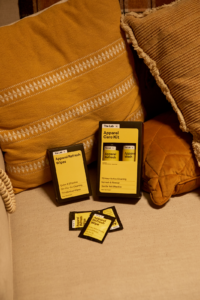 It uses beneficial bacteria to break down dirt and odour at a microscopic level, continuing to work for up to 72 hours after application. Instead of stripping materials, the process supports the integrity of the fabric, allowing garments to be cleaned less aggressively, less frequently, and with less long-term damage.
What We Keep, Keeps Us
At the centre of the campaign is a reflection on the emotional and cultural attachment people form with the garments that stay with them.
A jacket can carry someone’s past so completely that wearing it feels like stepping into a conversation already in progress. Denim can outlive entire phases and emerge looking better for it. Sneakers can mark personal milestones, the pair you saved for, searched for, or convinced yourself you didn’t need until you did. Caps hold memories of trips, first games, or someone else’s taste before it became your own.
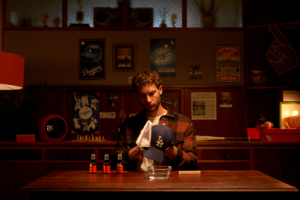 And then there are the quieter pieces. The T-shirt that could have been replaced several times but has not, or the dress you return to when you need to feel like yourself again. More than clothing, they are evidence of time spent, habits repeated, and of things that stayed when everything else changed.
There is a tension between what something is worth when you buy it and what it becomes if you keep it long enough. Value builds slowly, through memory and attachment, until replacing it feels less like an upgrade and more like a loss.
Led by Science, Committed to Care
Care is not an afterthought, and it is not something you turn to once an item is already worn down. It is a decision made early, in how something is treated while it is still new.
Care introduces a different pace, one that asks people to slow down in a world that rewards speed. It reframes ownership as something that deepens over time.
“There’s a disconnect between how much meaning people attach to their clothes and how they actually treat them day to day,” says Farah. “You see it all the time in pieces people say they love but do not really look after. Care forces you to confront whether something truly matters to you. Because if it does, you take care of it.”

